UPPER cities celebrate European Mobility Week 2026
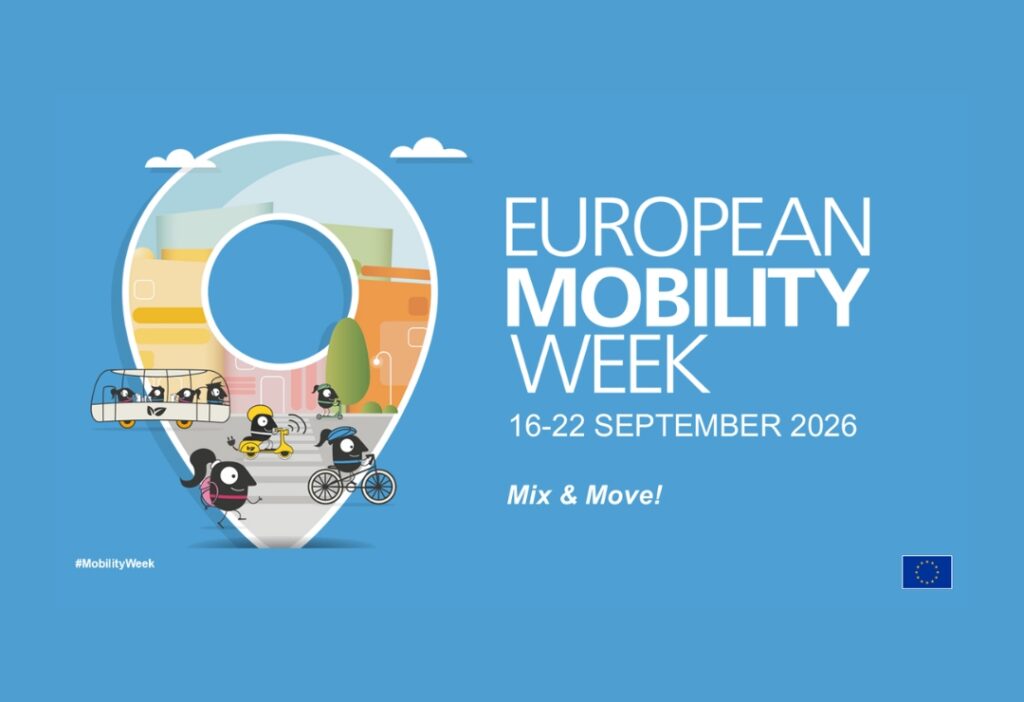
Every year, European Mobility Week brings passengers closer to their city. As Europe’s largest transport and environmental campaign, the 2026 edition saw over 2,500 towns and cities champion sustainable transport through 491 mobility actions.
This year’s theme, “Mobility for Everyone,” reflects one of UPPER’s core beliefs: mobility is a fundamental right and should be recognised as such. Regardless of age, background or gender, everyone should have access to safe, clean and accessible public transport.
Between 16 and 22 September, UPPER cities joined the campaign with activities ranging from cycling breakfasts and guided tours to open days, school activities and public events. Here is a glimpse of what happened across the UPPER cities, and perhaps some inspiration for next year!
Budapest: it all starts with the next generation
BKK kicked off the week with cycling breakfasts across the city, alongside several professional walking and cycling tours led by its own colleagues. The tours gave participants a closer look at good practices and recent mobility developments around Budapest.
The programme built up to the city’s Car-Free Weekend, where BKK hosted activities for children and gave teenagers the chance to meet its teams and exchange ideas. Young passengers also got a look behind the scenes. Students from a school located on a School Street - where car traffic is restricted around school arrival and departure times - visited BKK’s offices for a session on sustainable travel. They shared their own experiences of the School Street and, naturally, had plenty of questions about what it is like to work in public transport. A good way to plant the seed early!
Lisbon: how much space does mobility need?
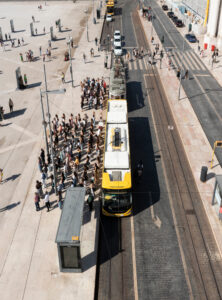
On 22 September, the UPPER action “Sustainable Mobility, Healthy City” brought Lisbon City Council, CARRIS, TML (Transportes Metropolitanos de Lisboa), and EMEL together at Praça do Comércio for European Car-Free Day.
The initiative focused on space use and transport capacity: one electric bus, one classic tram, 16 bicycles and three light vehicles were placed side by side to show just how differently each mode uses public space and how many people it can carry.
It was a simple way to make the impact of our travel choices visible. The way we move affects the space we all share - and sometimes, seeing the difference is enough to make you think twice. Choose wisely!
© Ana Serra and Nuno Correia
Valencia and the “Gran Fiesta de la Movilidad”
Valencia took the celebrations across the city, with seven days of workshops, visits, school activities and events encouraging people to leave the car at home and try the bus, the bike or simply walking.
One of the highlights was the Gran Fiesta de la Movilidad, alongside a wider programme of school activities, a photo contest, family events and challenges around the city. There was also a chance to see what normally happens behind the scenes. Open days gave visitors access to the Citizen Advice Office in Barrio del Carmen, the EMT Valencia Traffic Regulation Centre and the bus depot in San Isidro. And on Car-Free Day, 22 September, EMT public transport was free throughout the day. Plenty of reasons to leave the car at home!
Mannheim: behind the scenes of rail
In Mannheim, the week coincided with Germany’s nationwide Tag der Schiene - Rail Day. It was a particularly fitting moment for the city, as Mannheim’s main railway station celebrated its 150th anniversary. On 18 September, free guided tours took visitors behind the scenes of the station, covering everything from daily operations and lost property to the local Bahnhofsmission and train dispatching - parts of the station that passengers rarely get to see.
Leuven: taking UPPER into the wider city conversation
In Leuven, the UPPER project was represented at the Leuven 2030 Urban Lab network event, under the theme “Leuven as a laboratory for local autonomy and resilience.”
The event itself was not part of European Mobility Week, but it brought together organisations, companies, knowledge institutions, public authorities and residents working on Leuven’s sustainability transition. UPPER joined the discussion with a poster presenting the project and its results in Leuven. The event explored how local organisations can work together to remove barriers and help promising solutions scale.
And this is only a small snapshot of what happened across the cities during the week!
From children discovering public transport for the first time to passengers who have watched their city’s network change over decades, there is no single way to get people involved.
And that is how you get people to care about mobility: by involving them, trying different ways to bring them in, sparking their curiosity and giving them a reason to question how mobility works in their city, and how it could work better.
Most importantly, it gives citizens a place in the conversation about that change and reinforces that Mobility is a Right!